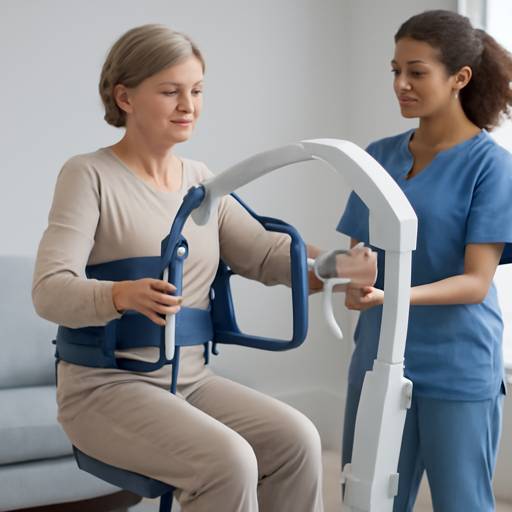
For decades, the simple act of standing from a seated position has been a monumental challenge for millions of patients recovering from surgery, living with chronic weakness, or navigating the later stages of life. Caregivers, whether in hospitals, nursing homes, or private residences, have long relied on manual transfers that strain their bodies and put patients at risk of falls. Enter the modern power sit to stand lift, a device that does more than just raise a person—it restores a fundamental human experience: the ability to rise with control, confidence, and minimal assistance. This article explores the engineering, clinical impact, and real-world success stories behind this transformative technology.
Understanding the Mechanics of a Power Sit to Stand Lift
A power sit to stand lift is not merely a hoist with straps. Its core innovation lies in its ability to leverage the patient’s own weight-bearing capacity while eliminating the dangerous shear forces and awkward postures that plague manual transfers. The device typically features a padded seat, a sturdy base with locking casters, and a battery-powered actuator that provides a smooth, controlled upward motion. Unlike full-body sling lifts, which require the patient to remain passive, the sit-to-stand lift encourages active participation. The patient’s feet remain on the floor or a footplate, and a knee pad stabilizes the lower body, allowing the patient to push through their legs as the lift guides them upright.
This biomechanical synergy is critical. By engaging the quadriceps, glutes, and core, the patient not only gains strength during rehabilitation but also retains a sense of agency. The lift’s motor ramps up gradually, preventing the jerky starts that can trigger muscle spasms or anxiety. Advanced models incorporate smart sensors that detect resistance; if the patient attempts to bear too much weight prematurely, the lift pauses and recalibrates. This is a dramatic departure from older pneumatic or manual floor lifts, which often required two caregivers and still carried a high risk of tipping.
For caregivers, the power sit to stand lift reduces the physical burden by up to 80% compared to manual methods. The lift handles the vertical thrust, while the caregiver simply guides the patient’s upper body and ensures alignment. Many units now include swivel seats that rotate 90 degrees, allowing a smooth transfer from a wheelchair to a toilet or bed without repositioning the entire device. The selection of a power sit to stand lift should consider floor type, patient weight capacity, and the height range of the seating surfaces involved. Modern lifts accommodate patients from 100 to 600 pounds, with adjustable knee pads and armrests to fit different leg lengths and body shapes.
Battery life has also evolved dramatically. Units now offer all-day use on a single charge, with backup manual pumps that allow operation during power failures. Some models integrate digital displays that track usage cycles, alerting staff when maintenance is due. The quiet motor operation is another underrated feature—loud machinery can distress dementia patients, whereas a nearly silent lift fosters calm and cooperation. In essence, the power sit to stand lift has evolved from a simple mechanical aid into a sophisticated piece of rehabilitative equipment that bridges the gap between total dependence and independent mobility.
Clinical Benefits and Real-World Applications
The clinical rationale for using a power sit to stand lift extends far beyond fall prevention. One of the most significant benefits is the reduction of orthostatic hypotension, a condition where blood pressure drops sharply upon standing. Manual transfers often force the patient upright too quickly, leading to dizziness, fainting, and secondary injuries. The lift’s controlled ascent allows the vascular system to adapt gradually, improving safety for patients on vasoactive medications or those with autonomic nervous system disorders.
In post-operative orthopedic care—especially after hip or knee replacements—the lift is invaluable. Surgeons now recommend early ambulation to prevent blood clots and muscle atrophy, but traditional transfers can dislocate a new joint. A properly adjusted sit-to-stand lift supports the surgical site by limiting abduction and rotation. Physical therapists use the device to perform standing tolerance tests, measuring how long a patient can bear weight before fatigue sets in. These metrics guide discharge planning and determine whether a patient can safely return home.
Another critical application is in bariatric care. Manual transfer of a patient weighing over 300 pounds often requires four or more caregivers, increasing the risk of falls and caregiver back injuries. A power sit to stand lift designed for bariatric use features a wider base, reinforced steel frame, and a high-torque motor that handles loads up to 700 pounds. Patients report feeling less exposed and vulnerable compared to being lifted by a sling, because they remain partially upright and cover their torso with a robe or gown. Dignity in care is not a luxury—it directly impacts patient compliance and emotional well-being.
Long-term care facilities have documented a 40% reduction in staff injury claims after transitioning to powered sit-to-stand lifts. The Occupational Safety and Health Administration (OSHA) has recognized these devices as key components of a safe patient handling program. However, proper training remains essential. Caregivers must learn how to position the knee pad at the correct height—usually two inches below the patella—and how to instruct the patient to lean forward slightly during the lift. When used correctly, the lift becomes an extension of the caregiver’s strength rather than a mechanical crutch. Some facilities now embed radio-frequency identification (RFID) tags on lifts to track usage and ensure that every shift receives consistent training.
In home care, families often face the emotional burden of helping a loved one stand. Without a lift, a spouse may develop chronic back pain, resentment, or even guilt when they cannot prevent a fall. Installing a power sit to stand lift transforms the home environment. It allows the patient to participate in daily routines—getting out of bed for breakfast, using the bathroom independently, or sitting at a dining table for the first time in months. Occupational therapists report that patients using these lifts regain a sense of normalcy that accelerates psychological recovery. The lift is not a crutch; it is a stepping stone toward reclaiming life.
Case Studies: Transforming Patient Mobility and Caregiver Safety
To understand the real-world impact of the power sit to stand lift, consider the case of a 68-year-old stroke survivor named Margaret. Admitted to a rehabilitation unit after a left-hemisphere ischemic stroke, she presented with right-sided weakness and significant trunk instability. Initially, her care team used a full-body sling lift to transfer her from bed to a wheelchair, but Margaret became distressed—she felt “like a sack of potatoes” and lost motivation to participate in therapy. The physical therapist introduced a sit-to-stand lift. Within three sessions, Margaret could bear 40% of her weight through her right leg. By week four, she was using the lift to stand at the bedside and practice weight shifts. Her discharge to home was accelerated by two weeks, and her caregiver—her husband—was trained to use the same lift at home. His risk of a back injury dropped to nearly zero.
Another powerful example comes from a skilled nursing facility in Ohio that serves a predominantly bariatric population. Before implementing powered sit-to-stand lifts, the facility reported an average of 12 staff injuries per year related to patient transfers, with an average cost of $45,000 per claim. After purchasing fifteen units and mandating their use for all standing transfers, injuries fell to just one incident over two years—a sprain caused when a clinician bypassed the lift for a “quick” manual transfer. The facility also saw a 15% decrease in patient skin tears and bruising, because the lift eliminated the friction caused by dragging a patient across a bed or chair.
Home health agencies are also embracing the device. A case published in the Journal of Home Health Nursing followed a 75-year-old woman with advanced osteoarthritis who had not stood in six months. Her daughter, a nurse, rented a power sit to stand lift and worked with a physical therapist to create a daily standing program. Initially, the patient could only stand for 30 seconds before her knees buckled. After three months, she could stand for three minutes and take two steps to a commode. The lift gave her the repetitive, low-stress loading needed to rebuild joint confidence without pain spikes. Her daughter noted that the lift “gave my mother back her dignity. She no longer felt like a burden.”
In pediatric care, a modified sit-to-stand lift has been used for adolescents with Duchenne muscular dystrophy. These patients gradually lose the ability to rise from a chair, but they can often bear weight through their legs if properly aligned. A lightweight, lower-height lift enables them to participate in standing frames and maintain bone density. The psychological impact is profound: teenagers report feeling “more normal” when they can stand to greet a visitor rather than always remaining seated. The lift’s motor is programmed to provide gradual resistance training, giving the muscles a gentle workout even as they weaken.
These diverse examples underscore a universal truth: the power sit to stand lift is not a one-size-fits-all miracle, but a versatile tool that adapts to the patient’s changing needs. Its success depends on proper selection, consistent use, and integration into a broader care plan that includes physical therapy, fall prevention education, and caregiver training. When these elements align, the lift becomes a catalyst for both clinical improvement and human connection.